

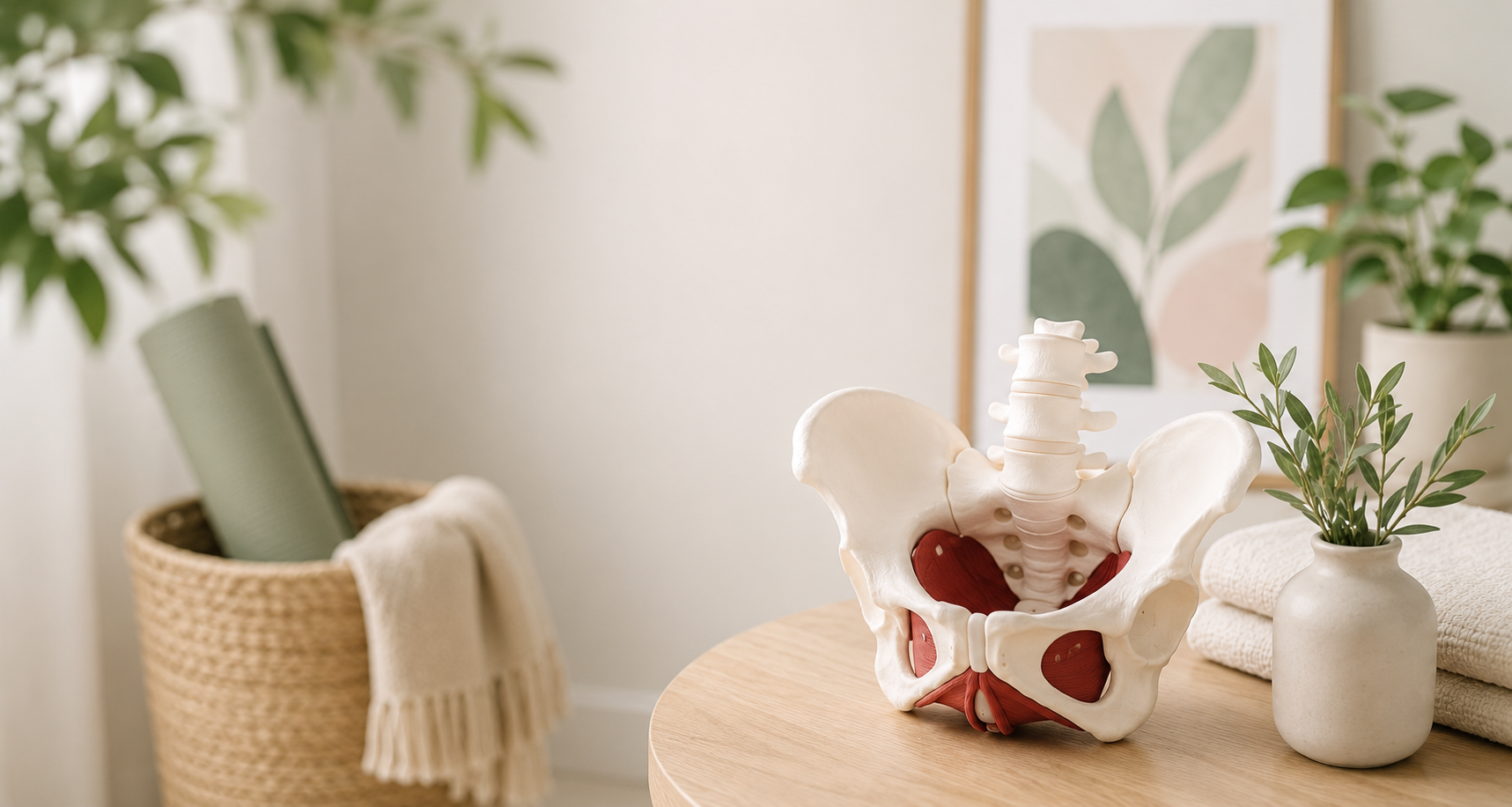
Pelvic Floor Physical Therapy FAQs
Answers to common questions about bladder leakage, pelvic pain, pregnancy, postpartum recovery, bowel dysfunction, men’s pelvic health, and in-home pelvic floor physical therapy.
Have Questions? You’re Not Alone.
Many people have questions before starting pelvic floor physical therapy, and that’s completely normal.
Whether you’re experiencing bladder leakage, urinary urgency, pelvic pain, constipation, pain with intimacy, pregnancy-related symptoms, postpartum concerns, or men’s pelvic health issues, we’re here to help you feel informed and comfortable before your first visit.
The Healthy Pelvis provides personalized, in-home pelvic floor physical therapy throughout Elmhurst and surrounding communities, and we believe that understanding your symptoms and treatment options is an important first step toward feeling better.
Below you’ll find answers to some of the questions we hear most often from patients.
Getting Started With Pelvic Floor Physical Therapy
-
Pelvic floor physical therapy is specialized physical therapy focused on the muscles, joints, nerves, and connective tissues that support bladder, bowel, sexual, core, and pelvic function.
Treatment may help improve bladder leakage, urinary urgency, pelvic pain, constipation, pregnancy discomfort, postpartum recovery, pain with intimacy, and men’s pelvic health concerns.
At The Healthy Pelvis, care is personalized to your symptoms, goals, and comfort level.
-
The Healthy Pelvis treats a wide range of pelvic floor conditions affecting women and men.
Common conditions we treat include:
Bladder leakage and urinary incontinence
Urinary urgency and frequent urination
Pelvic pain
Pain with intimacy
Constipation and bowel dysfunction
Pregnancy-related pain and discomfort
Postpartum recovery
Pelvic pressure and heaviness
Tailbone pain
Hip and low back pain related to pelvic floor dysfunction
Diastasis recti
Men’s pelvic health concerns
Post-prostatectomy recovery
If you’re unsure whether pelvic floor physical therapy may help your symptoms, we’re happy to discuss your concerns and determine whether treatment may be appropriate for you.
-
Internal pelvic floor examinations are one tool that can provide valuable information about pelvic floor muscle function, coordination, strength, and areas of tension or discomfort.
However, internal examinations are never required and are only performed with your full consent and comfort level in mind.
Many conditions can be successfully treated without an internal examination, and treatment plans are always individualized based on your symptoms, goals, and preferences.
At The Healthy Pelvis, patient comfort, education, and trust are always the priority.
-
In most cases, you do not need a referral to begin pelvic floor physical therapy in Illinois.
Illinois allows direct access to physical therapy, which means many patients can schedule an evaluation without first seeing a physician.
If you plan to use insurance benefits, some insurance plans may require a referral or prescription. The Healthy Pelvis is in-network with BCBS PPO plans and can help determine whether any additional documentation is needed before your first visit.
If you’re unsure whether you need a referral, simply reach out and we’ll help guide you through the process.
-
Your first visit begins with a detailed conversation about your symptoms, medical history, goals, lifestyle, and any questions you may have.
Your evaluation may include an assessment of posture, breathing patterns, movement, strength, mobility, and how your core and pelvic floor muscles work together.
If appropriate and with your consent, an internal pelvic floor examination may be offered, but it is never required.
Following your evaluation, Dr. Melissa Scholl will explain her findings, answer your questions, and develop a personalized treatment plan designed around your goals and symptoms.
Because The Healthy Pelvis provides concierge, in-home care, your visit takes place in the comfort and privacy of your own home with dedicated one-on-one attention throughout the session.
Insurance, Visits, and In-Home Care
-
The Healthy Pelvis is in-network with BCBS PPO plans.
For patients with other insurance plans, we can provide a superbill that you may submit to your insurance company for possible out-of-network reimbursement.
If you have questions about your specific insurance coverage or benefits, we’re happy to help you understand your options before your first visit.
-
Initial evaluations are typically 60 to 75 minutes, allowing plenty of time to discuss your symptoms, goals, medical history, and complete a thorough assessment.
Follow-up visits are typically 60 minutes and include one-on-one treatment focused entirely on your individual needs and progress.
Because The Healthy Pelvis is a concierge practice, every appointment is dedicated exclusively to you without the interruptions or time constraints that can occur in larger clinic settings.
-
The number of visits needed varies depending on your symptoms, goals, medical history, and how long you’ve been experiencing symptoms.
Some patients notice improvement within just a few visits, while others with more complex or long-standing symptoms may benefit from a longer course of care.
Following your evaluation, Dr. Melissa Scholl will discuss her recommendations and develop a personalized treatment plan designed around your goals, lifestyle, and progress.
The goal is always to help you achieve meaningful improvement as efficiently as possible while giving you the tools and confidence to maintain your progress long-term.
-
Yes. The Healthy Pelvis is a concierge practice that provides personalized pelvic floor physical therapy directly in your home.
Receiving care at home allows you to avoid waiting rooms, reduce travel time, and receive treatment in a comfortable and private environment.
Many patients appreciate the convenience of fitting appointments into busy schedules while still receiving dedicated, one-on-one care from an experienced pelvic health specialist.
In-home visits also allow treatment recommendations and exercises to be tailored to your daily routines, activities, and environment.
-
Common service areas include:
Elmhurst
Oak Brook
Oakbrook Terrace
Hinsdale
Lombard
Villa Park
Bensenville
Glen Ellyn
Wheaton
Downers Grove
Clarendon Hills
Western Springs
La Grange
Burr Ridge
Addison
If you do not see your community listed, please reach out. Depending on location and availability, we may still be able to provide care in your area.
-
Yes. Pelvic floor physical therapy can be extremely beneficial after childbirth, whether you delivered vaginally or by C-section.
Pregnancy and delivery place significant demands on the pelvic floor, core, and surrounding muscles, which can contribute to symptoms such as bladder leakage, pelvic pressure, pain, weakness, or difficulty returning to exercise.
Postpartum pelvic floor physical therapy focuses on restoring strength, improving coordination, supporting recovery, and helping you feel more confident in your body as you return to daily activities and exercise.
-
Urinary leakage after pregnancy and childbirth is very common, but it is not something you simply have to accept as your new normal.
Many women experience leaking with coughing, sneezing, laughing, exercise, or lifting after having a baby. These symptoms often occur because the pelvic floor muscles and surrounding tissues have been placed under significant stress during pregnancy and delivery.
Pelvic floor physical therapy can help improve strength, coordination, and support to reduce leakage and help you return to your daily activities with confidence.
-
Many women can safely begin pelvic floor physical therapy as early as a few weeks after delivery, depending on their symptoms, recovery, and recommendations from their healthcare provider.
Some women seek treatment soon after birth to address pain, bladder leakage, or healing concerns, while others begin therapy later to improve strength, core function, and return to exercise.
There is no “wrong” time to start pelvic floor physical therapy. Whether you delivered six weeks ago or six years ago, treatment can still be beneficial.
-
Yes. Cesarean delivery is a major abdominal surgery, and many women benefit from pelvic floor physical therapy during recovery.
Treatment may help address abdominal pain, scar mobility, core weakness, back pain, pelvic pain, and difficulty returning to daily activities or exercise.
Pelvic floor physical therapy can also help improve breathing mechanics, abdominal muscle coordination, and overall movement as your body heals following delivery.
-
Yes. Diastasis recti, or separation of the abdominal muscles, is common during and after pregnancy.
Pelvic floor physical therapy focuses on improving the coordination between your breathing, core muscles, and pelvic floor to help support recovery and improve function.
Treatment may include core strengthening, movement strategies, and exercise guidance designed to help you safely return to the activities you enjoy while improving overall stability and confidence.
-
Yes. Pelvic floor physical therapy is one of the most effective treatments for many types of urinary leakage.
Leaking with coughing, sneezing, laughing, exercise, lifting, or feeling a sudden urge to urinate is common, but it is not something you simply have to accept.
Treatment focuses on improving pelvic floor muscle coordination, strength, breathing mechanics, and bladder habits to help reduce leakage and restore confidence in daily activities.
-
A frequent urge to urinate is often associated with bladder urgency, bladder sensitivity, or pelvic floor muscle dysfunction.
Many people find themselves constantly looking for the nearest bathroom, limiting travel, exercise, or social activities because of their symptoms.
Pelvic floor physical therapy can help identify contributing factors and develop strategies to improve bladder control and reduce urgency and frequency.
-
Yes. Pelvic floor physical therapy can often help reduce urinary urgency and frequent urination.
Treatment may include bladder retraining strategies, pelvic floor muscle coordination exercises, breathing techniques, and education about bladder habits that may be contributing to symptoms.
Many patients experience significant improvement and are able to return to activities without constantly worrying about bathroom access.
-
Although urinary leakage during activities such as coughing, sneezing, running, jumping, or exercise is common, it is not considered normal.
These symptoms often indicate that the pelvic floor muscles are not functioning as efficiently as they should, whether due to weakness, tightness, poor coordination, or increased pressure within the abdomen.
Pelvic floor physical therapy can help identify the underlying cause and develop a treatment plan designed to improve bladder control and confidence.
-
Not necessarily.
While Kegel exercises can be helpful for some individuals, they are not appropriate for everyone and are not the solution for every pelvic floor condition.
Some people actually have pelvic floor muscles that are too tight, overactive, or poorly coordinated, and strengthening exercises alone may worsen symptoms.
A pelvic floor evaluation helps determine the most appropriate treatment approach based on your individual needs and symptoms.
-
Yes. Pelvic floor physical therapy can be highly effective for many types of pelvic pain.
Pelvic pain may be related to muscle tension, nerve irritation, scar tissue, movement patterns, breathing mechanics, or pelvic floor dysfunction.
Treatment focuses on identifying the underlying causes of your symptoms and developing a personalized plan to reduce pain, improve movement, and help you return to the activities you enjoy.
-
Pain with intimacy is common, but it is not normal and it is not something you simply have to live with.
Pain may be related to pelvic floor muscle tension, scar tissue, hormonal changes, childbirth, surgery, or other pelvic health conditions.
Pelvic floor physical therapy can help identify contributing factors and provide treatment strategies designed to improve comfort, confidence, and quality of life.
-
Yes. The pelvic floor muscles work closely with the hips, low back, abdomen, and tailbone, which means dysfunction in one area can affect another.
Many patients are surprised to learn that hip pain, tailbone pain, or persistent low back pain may have a pelvic floor component.
Treatment focuses on improving movement, muscle coordination, strength, and mobility to address the root cause of symptoms.
-
Yes. Pelvic floor muscles can become tight, overactive, or have difficulty relaxing just as they can become weak.
Tight pelvic floor muscles may contribute to pelvic pain, urinary urgency, constipation, pain with intimacy, or difficulty fully emptying the bladder or bowels.
Treatment often focuses on improving muscle relaxation, breathing coordination, mobility, and overall pelvic floor function rather than simply strengthening the muscles.
-
While pelvic floor physical therapy does not treat endometriosis itself, it can often help address many of the muscle tension, pain, and movement limitations that develop as a result of living with chronic pelvic pain.
Treatment may help improve mobility, reduce muscle guarding, improve pelvic floor coordination, and support overall quality of life as part of a comprehensive treatment plan.
-
Yes. Pelvic floor dysfunction is a common and often overlooked contributor to constipation.
Some individuals have difficulty coordinating or relaxing the pelvic floor muscles during bowel movements, which can make it difficult to empty the bowels completely.
Pelvic floor physical therapy focuses on improving muscle coordination, breathing mechanics, bowel habits, and movement patterns to support more comfortable and effective bowel function.
-
Yes. Feeling as though you cannot fully empty your bowels can sometimes be related to pelvic floor muscle dysfunction or poor muscle coordination.
Treatment focuses on improving pelvic floor relaxation, breathing strategies, positioning, and bowel mechanics to help improve emptying and reduce straining.
-
Yes. Pelvic floor physical therapy can often help improve bowel control and reduce symptoms of urgency or accidental leakage.
Treatment may focus on improving muscle strength, coordination, bowel habits, and strategies to improve confidence and quality of life.
-
No. Frequent straining during bowel movements can place excessive pressure on the pelvic floor and may contribute to symptoms such as hemorrhoids, pelvic organ prolapse, pelvic pain, or worsening constipation.
Healthy bowel movements should generally occur without significant pushing or straining.
Pelvic floor physical therapy can help identify factors contributing to straining and provide strategies to improve bowel function.
-
Yes. The pelvic floor muscles play an important role in bowel control and emptying.
If these muscles are weak, tight, overactive, or poorly coordinated, symptoms such as constipation, incomplete emptying, urgency, or leakage can occur.
Pelvic floor physical therapy focuses on restoring proper muscle function and coordination to improve bowel health and overall quality of life.
-
Yes. Men have pelvic floor muscles too, and pelvic floor dysfunction can affect bladder function, bowel function, sexual health, and pelvic pain.
The Healthy Pelvis provides personalized pelvic floor physical therapy for men experiencing urinary symptoms, pelvic pain, bowel dysfunction, and recovery following prostate surgery.
-
Yes. Pelvic floor physical therapy is commonly recommended following prostate surgery to help improve bladder control, strength, and confidence during recovery.
Treatment may focus on pelvic floor muscle coordination, breathing mechanics, bladder retraining, core strength, and return to daily activities and exercise.
Many men find that pelvic floor rehabilitation helps them recover more quickly and return to their normal routines with greater confidence.
-
Yes. Men can experience pelvic pain, groin pain, tailbone pain, testicular pain, and discomfort with sitting or exercise that may be related to pelvic floor dysfunction.
Treatment focuses on identifying the underlying causes of symptoms and improving muscle function, mobility, and coordination to reduce pain and improve quality of life.
-
Yes. Urinary leakage in men is often associated with prostate surgery, aging, or pelvic floor dysfunction and can frequently improve with treatment.
Pelvic floor physical therapy focuses on improving muscle coordination, bladder habits, and overall pelvic floor function to help improve bladder control and confidence.
-
In some cases, yes. The pelvic floor muscles play an important role in sexual function and blood flow.
Pelvic floor dysfunction may contribute to erectile difficulties in some men, and pelvic floor physical therapy may be one part of a comprehensive treatment plan.
Treatment recommendations are always individualized based on symptoms, goals, and medical history.
Service Areas and Scheduling
-
The Healthy Pelvis provides concierge, in-home pelvic floor physical therapy throughout Elmhurst and many surrounding DuPage County communities.
Common service areas include Elmhurst, Oak Brook, Oakbrook Terrace, Hinsdale, Lombard, Villa Park, Bensenville, Glen Ellyn, Wheaton, Downers Grove, Clarendon Hills, Western Springs, La Grange, Burr Ridge, and Addison.
If you do not see your community listed, please contact us. Depending on location and scheduling availability, we may still be able to provide care in your area.
-
Yes. The Healthy Pelvis proudly provides personalized, in-home pelvic floor physical therapy throughout Elmhurst and surrounding communities.
Many patients appreciate receiving expert care in the comfort and privacy of their own home without the need to travel to another appointment.
-
Scheduling an appointment is easy.
You can request an appointment through our website, contact us by phone, or reach out by email to discuss your symptoms and determine whether pelvic floor physical therapy may be a good fit for your needs.
We’re happy to answer questions and help guide you through the process before your first visit.
-
The Healthy Pelvis offers flexible scheduling options designed to accommodate busy families, working professionals, and new parents whenever possible.
Availability varies throughout the week, so we encourage patients to reach out early to discuss scheduling preferences.
-
If bladder symptoms, pelvic pain, bowel dysfunction, pregnancy discomfort, postpartum concerns, or men’s pelvic health issues are affecting your daily life, pelvic floor physical therapy may be able to help.
Many people wait months or even years before seeking treatment because they assume their symptoms are normal or untreatable.
If you’re unsure whether pelvic floor physical therapy is appropriate for your situation, we’re happy to answer your questions and help determine whether an evaluation makes sense for you.
Ready to Start Feeling Better?
Personalized pelvic floor physical therapy for women and men throughout Elmhurst and surrounding Western Chicago communities.
Whether you’re experiencing bladder leakage, pelvic pain, pregnancy-related symptoms, postpartum concerns, bowel dysfunction, or men’s pelvic health issues, help is available.
Schedule your visit today to get started.